


In our trade, innovation rarely looks like the innovation you hear about at conferences. It is not about revolutions, but about tools that remove errors and dead time from activities we repeat hundreds of times a year. The result, though, is visible: less rework, shorter site occupation and less disruption for the people living around it.
The first change was digital surveying. Before opening a trench we map the existing utilities with ground-penetrating radar and electromagnetic locators, and record everything on a drawing shared with the client. Knowing in advance where a gas pipe or a live cable runs means avoiding the service interruption that can hold up a site for days.
The second is systematic photographic documentation. Every phase that will be covered up (the trench bottom, the duct laying, the protective sand, the warning tape) is photographed and archived before it is closed. It is a mundane practice that costs a few minutes and settles in advance any future dispute about the state of the work.
The third concerns trenching techniques. Where the context allows we use chain trenchers and micro-trenching instead of conventional excavation: the slot is narrower, there is less spoil, and reinstatement is faster. In a historic town centre this can be the difference between closing a street for two days or for two weeks.
On quality, finally, we take no shortcuts. Fibre splices are verified with an OTDR and the measurement certificates are handed over with the work; electrical installations are tested and accompanied by a declaration of conformity. If a value falls outside the parameters, the splice is redone: doing it now is cheaper than coming back six months later.
From the blog
Work with us: we're looking for new talent
We are looking for technical profiles to join our growing team.

How to choose the right partner for your networks
The criteria that make the difference when entrusting a public-utility work.
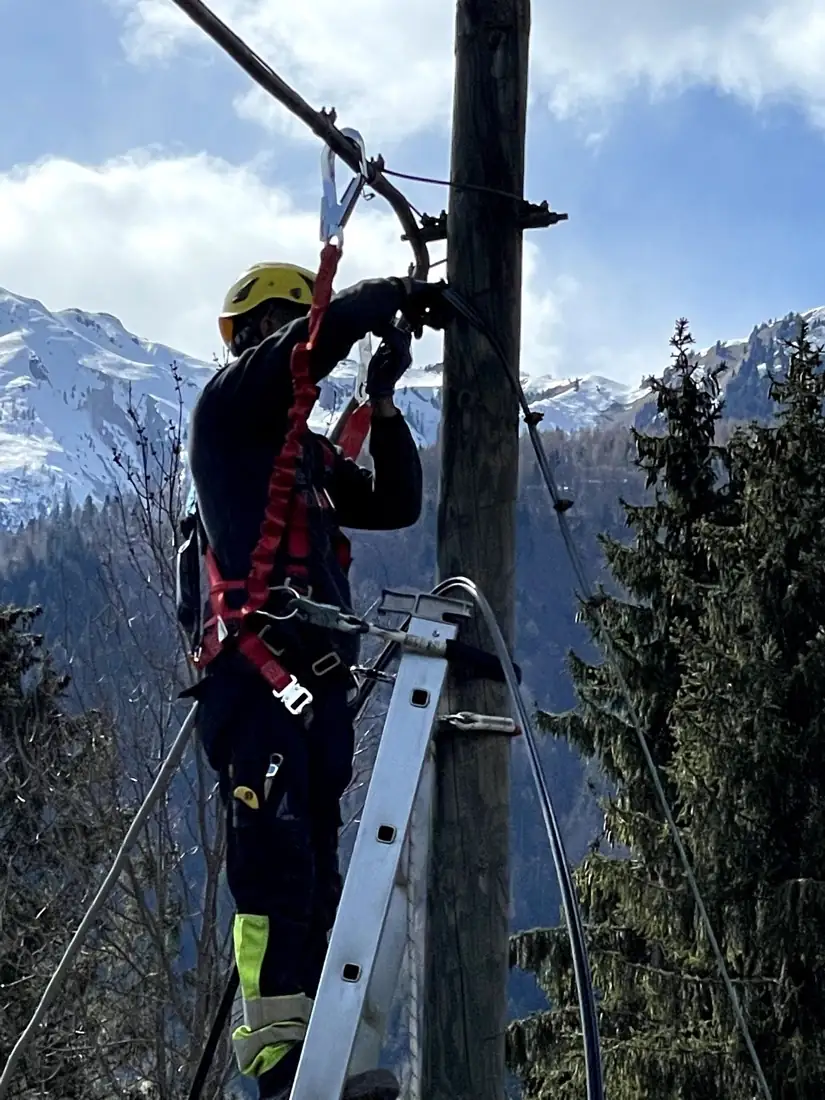
Safety on site is our priority
Training, equipment and procedures for working safely.